
Growing up, my summers were defined by adventure. Every year, my parents packed up the car and took me and my brother on road trips across Scandinavia. From exploring the locks of the Göta Canal to learning the art of glassmaking in Kosta Boda and old-style papermaking in Lessebo, our travels were always a blend of education and exploration.
One year, we watched the midnight sun hover on the horizon in Karesuando, only to rise immediately again. We crossed into Finland to visit Santa Claus Village in Rovaniemi and even peeked into Russia during the Cold War. We climbed the summer slopes of Åre (because my mom was too scared of the ski lift) and drove the serpentine Trollstigen road in Norway,. I still remember my dad getting a speeding ticket in Trondheim—we were too busy gawking at massive oil platforms being built to notice the signs!
A Family of Travelers
It wasn’t until later in life that I realized travel runs deep in my veins. My great-grandfather was born in Genarp, Sweden, near my childhood village, but moved to Denmark and later served in Charlotte Amalie as a Danish soldier during the handover of the Virgin Islands to the U.S. He eventually joined the merchant marine, traveling the world.
On my father’s side, my great-grandmother, a cigar maker from Vyborg (now part of Finland), fled to Denmark amid the chaos of the Russian Revolution. Her work was closely tied to the Tsar’s entourage, and when the Bolsheviks seized power, safety became a pressing concern. Her flight coincided with Finland’s 1918 independence and its bloody civil war.
With such a mosaic of heritage and stories of movement, I often joke that I’m a proper Scandinavian Viking. Like the Vikings of old, I’m drawn to exploration and adventure—but thankfully, the pillaging days are well behind us.
Discovering Ham Radio
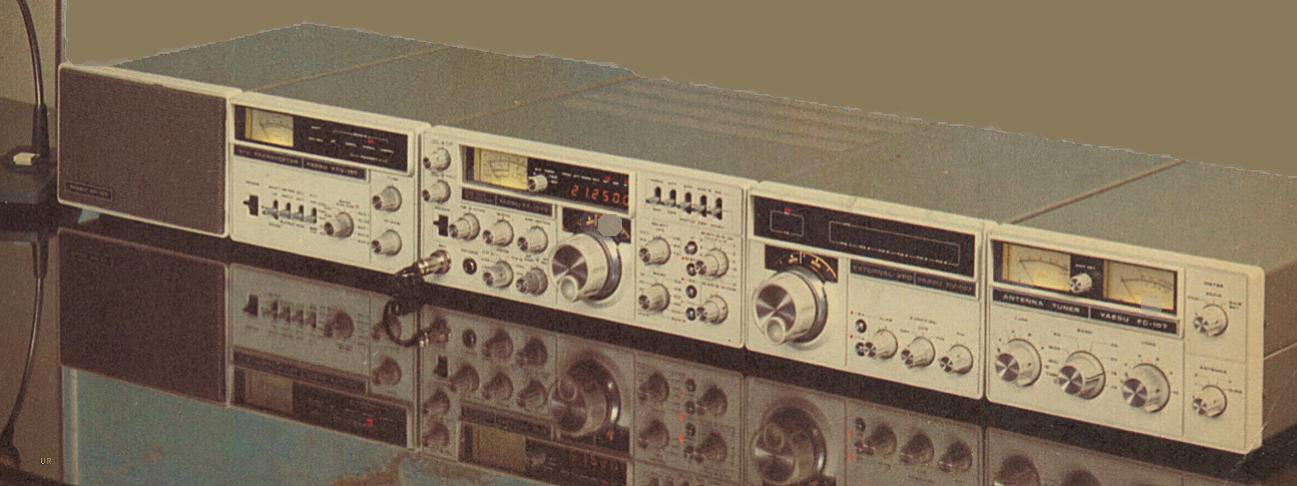
By age 13, my curiosity for electronics was insatiable. I disassembled any device I could find, trying (and often failing) to create something new from the parts. One day, while scanning for Radio Luxembourg on our stereo, I stumbled upon strange beeping tones—Morse code! Fascinated, I biked to the local library and checked out all three of their books on radio. One, with a picture of a Yaesu FT-107M radio line from 1978, captivated me. I was hooked.
The book listed Ham radio clubs across Sweden, so I wrote to the closest ones after deciphering the Morse code I had heard (which, unbeknownst to me, was from a numbers station). Around the same time, I also wrote to the local government, requesting a skateboard rink for our village. While I fancied myself the Tony Alva of my small town, my focus quickly shifted to Ham radio.

A month later, I received a reply—not from the government, but from SM7EQL, Ben, who invited me to visit SK7CE Ham Club in Lund. When I walked into the club and saw their bound archives of CQ, QST, and other Ham magazines, along with their full Drake 4C line radio setup, I knew I had found my place.
The Journey to My First License
Over the next few years, I threw myself into Ham radio. I learned the ropes at SK7CE, listening on SSB, jotting down callsigns, and tinkering with transmitters. I even started a CW (Morse code) course but struggled and gave up for a while. Instead, I focused on passing the technical test for the T-class certificate, which I earned at age 17 in June 1984.
My first station was a modest setup: a homebuilt crystal-driven 40m transmitter with an RCA-807 tube and an Eddystone receiver. I worked nights chasing DX stations and making QSOs, often burning the midnight oil to catch the best propagation.
My interest in computers grew alongside my love for radios. I started with an ABC80 at school, then moved on to a ZX81, VIC-20, and eventually, the Commodore 64. I programmed a prefix quiz game to memorize Ham callsigns and built an interface to automate CQ calls via optocouplers.
The turning point came when I failed to reach a British station on SSB. Frustrated, I wired up my stapler with two cables as a makeshift Morse key, sent my call on CW, and made the contact. That success reignited my determination to master Morse code.
Advancing in Ham Radio
By December 1985, I earned my C-class certificate, granting me access to HF bands. That weekend, I made my first 100 QSOs on 40m CW, using nothing but a handpump key. By chance, my high school was near SK7CE, so I spent every free moment operating their radios, chasing DX, and logging contacts.
In March 1987, I passed the A-class (Extra Class in the U.S.) license exam, solidifying my place in the Ham community. Around this time, the FO0XX DXpedition was the talk of the town, sparking my interest in DXpeditioning. I didn’t work them, but I did log 3Y1EE from Peter I Island in 1987—a thrilling moment.

A Lifetime of Passion
Ham radio has been more than a hobby; it’s been a gateway to exploration, learning, and global connection. From my teenage nights soldering circuits and logging QSOs to my continued fascination with radios and travel, it’s shaped who I am today. The thrill of calling CQ and hearing a distant station reply never fades, much like the Viking spirit of discovery that’s always driven me.