
In March 1987, I passed the A-Class Certificate exam (equivalent to Extra Class in the U.S.), a pivotal moment in my journey as a Ham radio operator. By then, I was three years into a four-year electronics course—what might be described as a high school engineering program today. Yet, as the final year began, I found myself exhausted and unmotivated. Whether it was from too many late nights chasing DX or a general burnout from academics, I simply couldn’t focus.
One week into the new term, I approached the school principal, Karl-Erik (SM7FQH), who also happened to be a Ham. I confessed my struggles, and his response surprised me: “Take a sabbatical, recharge, and come back to finish the course when you’re ready.” His understanding gave me the freedom to explore another path.
I wasted no time. I called up my summer job boss and was quickly rehired. Coincidentally, two of my colleagues, Ben (SM7EQL) and Lennart (SM7OEL), were also avid Ham operators. Our shared enthusiasm led to countless nights chasing DX and rebuilding SK7CE, our local Ham club station. Together, we transformed it into a formidable setup for contests like CQWW, WPX, and SAC.
Ben, my Elmer, often remarked that my boundless energy was infectious, driving the club to new heights of activity. My passion extended beyond the station—I contributed to the Swedish QTC magazine with DX reports and spent long hours operating, logging, and learning. Contesting became a full-time obsession, whether solo or as part of the team.
Military Service and Discovering SL7BX
In 1987, while enjoying my newfound freedom, the Swedish draft letter arrived. By June, I reported to Eksjö to begin a one-year stint in the military, training as a communications officer in the infantry. Though not the most glamorous role, it gave me access to a car for landline connections—a small perk I appreciated.
But DXing was never far from my mind. To my delight, I discovered that the base had an amateur radio station, SL7BX. It had been underused until my arrival, but I changed that quickly. I filled the logbooks with QSOs, so much so that I earned a reprimand from the officers for using too many QSL cards.
Military service wasn’t just about radio, though. Living in close quarters with ten other young men was a crash course in teamwork, resilience, and respect for differing personalities. I firmly believe this experience built a foundation of ethics, discipline, and camaraderie that every young adult could benefit from. These lessons would prove invaluable later during DX-peditions and in my professional life.
Dreaming of Escape from Winter
The bitter Swedish winter of 1987 was a turning point. On one particularly frigid exercise—camping in -10°C temperatures, soaked from the day’s march—I began dreaming of escape. My mind wandered to warmer climes, and by the time the exercise ended, I had a plan: I would spend the next winter on the opposite side of the world.

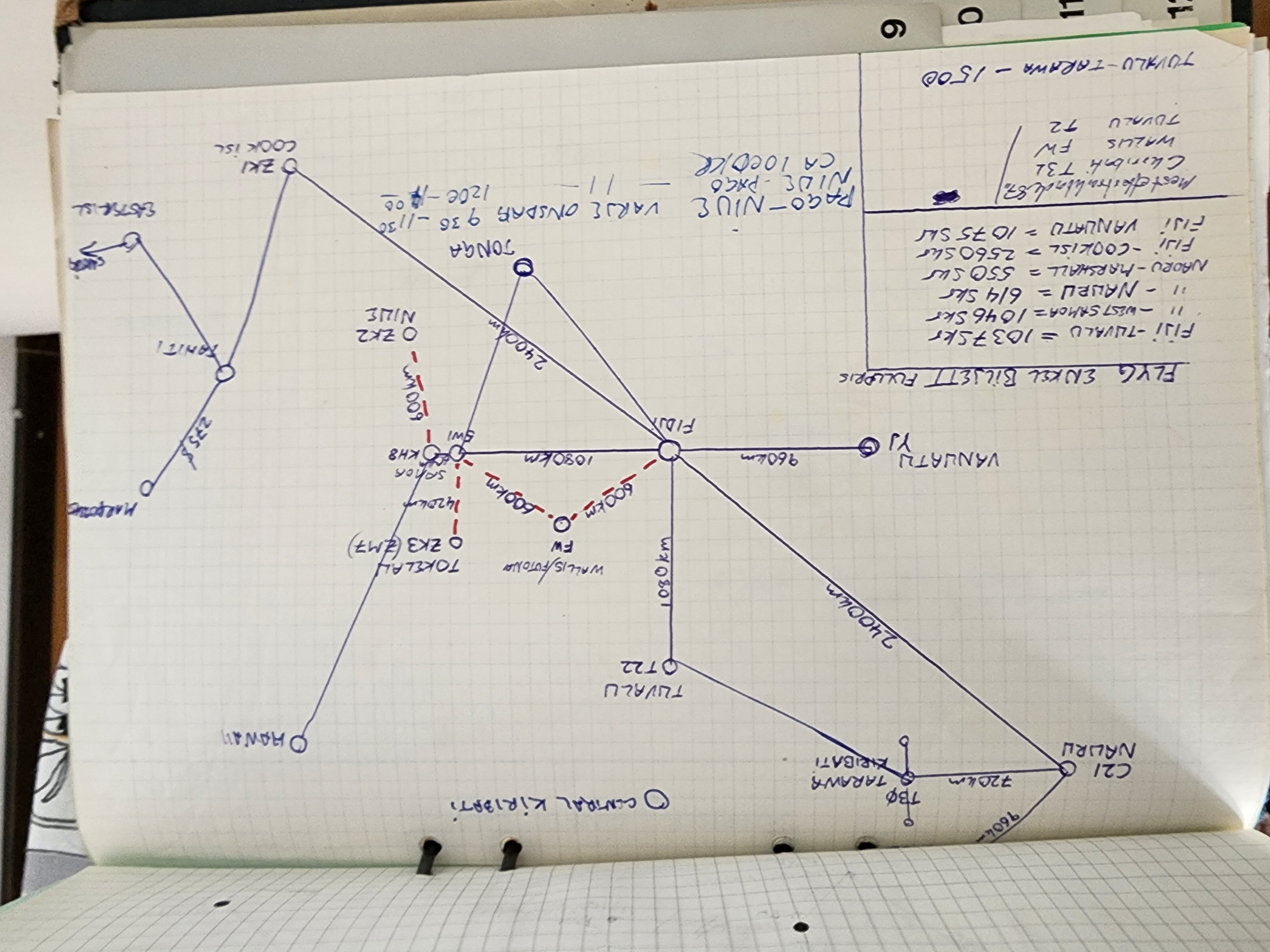
Over Christmas break, I immersed myself in travel research. I devoured books, collected brochures, and even obtained a copy of the IATA flight directory, a thick volume listing international routes. With help from a travel agent in Malmö, I began sketching out a dream itinerary.

To fund the trip, I saved every kronor of my military allowance, which was a modest 3 USD per day at the time. The exchange rate—5.5 SEK to 1 USD—worked in my favor, and I avoided unnecessary expenses to maximize my savings.
Inspired by the Legends of Ham Radio
As I planned my escape, my passion for Ham radio continued to grow, fueled by stories of legendary DX-peditions. The exploits of FO0XX Clipperton (1985 and 1986) had left an indelible mark, as had the adventures of Iris and Lloyd Colvin, who seemed to live a nomadic life of DXing.
Martti, OH2BH, was another major influence. I had worked him during CQWW 1986 when he operated from EA9AM, and his tales of Market Reef (OJ0AM) were legendary. I marveled at his ability to turn isolated locations into hotspots of radio activity, proving that persistence and passion could overcome any challenge.
From Concept to Reality: Preparing for the Pacific
By 1988, I was deep into preparations for my backpacking trip to the Pacific. Inspired by stories of the Colvins and the DX-peditions of SM0AGD, ZL1AMO, and VK9NS, I envisioned combining travel with amateur radio.
Swedish Radio Supply owner Hans Nordwall lent me an Icom IC-735 and a switch-mode power supply, which I modified for dual 110/220V operation. Erik, SM0AGD, shared his expertise, guiding me through CW filter modifications to optimize my setup for pileups. Erik, who was planning his own DX-pedition to São Tomé (S9AGD), was a constant source of encouragement.
I spent countless hours testing and re-testing my equipment. Packing became a ritual—what to bring, what to leave behind, and how to fit everything into a manageable load. The formula was simple, 5kg clothes and 20 kg or radiogear in backpack and the radio in its box as carry on. With a budget of 1,000 USD for airfare and another 2,000 USD in traveler’s cheques for a 6 months trip, this was a true shoestring adventure.
The Spirit of the Impossible
Between 1984, when I earned my first callsign (SM7PKK) at age 17, and 1988, my life transformed in ways I could never have predicted. Those four years were a whirlwind of growth, learning, and discovery.
Looking back, I realize that the word “impossible” had no place in my vocabulary. When someone said something couldn’t be done, it only fueled my determination to prove otherwise. This mindset carried me through every challenge, from mastering CW to preparing for a solo backpacking DX-pedition.
By September 1988, the moment had arrived. With my backpack, radio gear, and an insatiable curiosity about the world, I was ready to embark on a journey that would define the next chapter of my life.
