
“So what happened to SM7PKK? He came, he saw, he conquered the pileups—and then vanished completely.”
This is a question I’ve heard more than once over the years. The answer has both a short version and a long one.
The short version? My passion for ham radio, DX-pedition organization, and technical expertise between 1988 and 1997 led me to an unexpected career—a career so far removed from anything I could have imagined that it feels almost surreal in hindsight. That career has now come to an end, 27 years later, I step into a different stage in my life—not to sit idle, but to travel the world in the spirit of adventure.
The longer version? It’s a story that fascinates my children and surprises many who knew me back then.
A Surprising Career Shift
In December 1994, I attended a course with the Swedish Rescue Services Agency (SRSA), now part of MSB (Sweden’s Civil Contingencies Agency). SRSA was well-known for responding to disasters in Sweden and abroad, including the Armenian earthquake and the Rwandan genocide. They were seeking technically skilled individuals with experience in HF/VHF and satellite communications. With my DX-pedition background, I fit the profile perfectly.
The course trained us to deploy fully independent communication centers anywhere in the world—something I had already done in some of the most remote places on Earth. I joined their standby list, ready to be deployed by the Swedish government on short notice for international assignments.
In late 1995, I received my first call: a three-month deployment to Liberia. Unfortunately, delays in the peace talks meant the assignment was postponed, and when the call finally came, I couldn’t go. At the time, I was deeply involved in deploying satellite TV systems for ships across Europe, and the project was at a critical stage.
Despite this, my work in telecommunications brought new adventures. I traveled extensively and even made brief visits to remote locations like Bear Island and Jan Mayen. One incredible coincidence occurred during lunch on Bear Island when I met someone who had been to Banaba in the 1980s—a surreal moment of connection across time and geography.
Crossing Paths with ON6TT
In 1995, I presented the 3D2CT and 3D2CU Conway Reef DX-peditions at the RSGB Ham Radio Convention. By chance, Peter (ON6TT) was there as well, giving a talk about the AH1A Howland Island operation. Unfortunately, our presentations were scheduled at the same time, so I missed his session, though we briefly exchanged pleasantries before our respective talks.
At the time, Peter was heavily involved with the Red Cross and traveling throughout Africa. While we didn’t know it then, this fleeting encounter would prove pivotal just two years later.
A New Calling in Humanitarian Work
In March 1997, Peter posted an urgent call for two radio communications experts on the new ham radio bulletins and packet clusters. The job description listed 15 tasks. I understood two of them but decided to be bold and send an email anyway.
In my first email, I wrote, “I can join in a month after completing my contract obligations in Sweden.”
By the next day, I had heard nothing, so I sent another message:
“If you can get me the contract, I can be on flight BAxxxx within 48 hours. I’ll sort out the paperwork in Sweden.”
This time, Peter responded within an hour, asking about my work experience and education. I hesitated. My formal education amounted to a high school diploma in electronics.
When I explained this, Peter replied, “Hmm, that won’t work. Tell me everything about your DX-pedition experience.”
So, I shared all the details—3D2AM, 3D2CT, T33T, T33R, and my backpacking adventures. Peter responded with encouragement: “That’s plenty. Now I just need to convince a few bureaucrats who don’t know radio comms!”
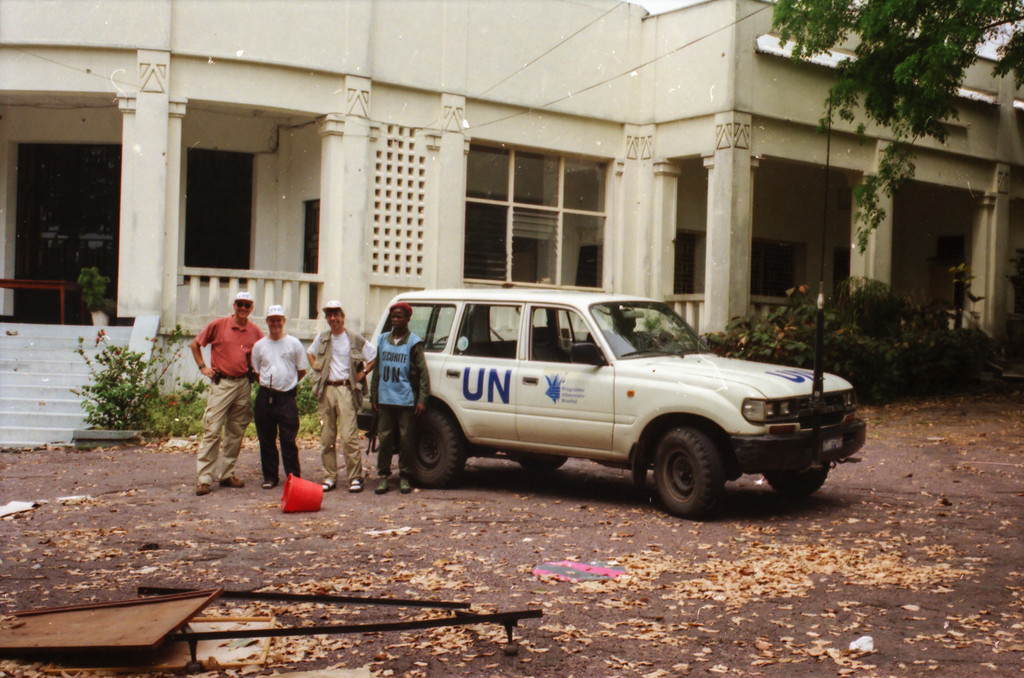
By the end of April 1997, I had the contract in hand and was on a plane to Uganda, where I joined a humanitarian operation addressing the fallout of the Rwandan genocide. The scope of the work was massive, covering five countries—Rwanda, Burundi, Tanzania, DR Congo, and Uganda—with occasional forays into Congo-Brazzaville.

Reflections on the Journey
Looking back, it’s amazing how ham radio and DX-peditioning opened doors to a career in humanitarian work. The skills I honed planning and executing DX-peditions—logistics, communications, and adaptability—translated seamlessly into disaster response.
From pileups to crises, the thread that connected it all was a love for challenge and adventure. Now, as I embark on the next phase of life aboard my yacht, I carry with me the same spirit of exploration that defined my years as SM7PKK.
The airwaves may have grown quieter, but the journey is far from over.