
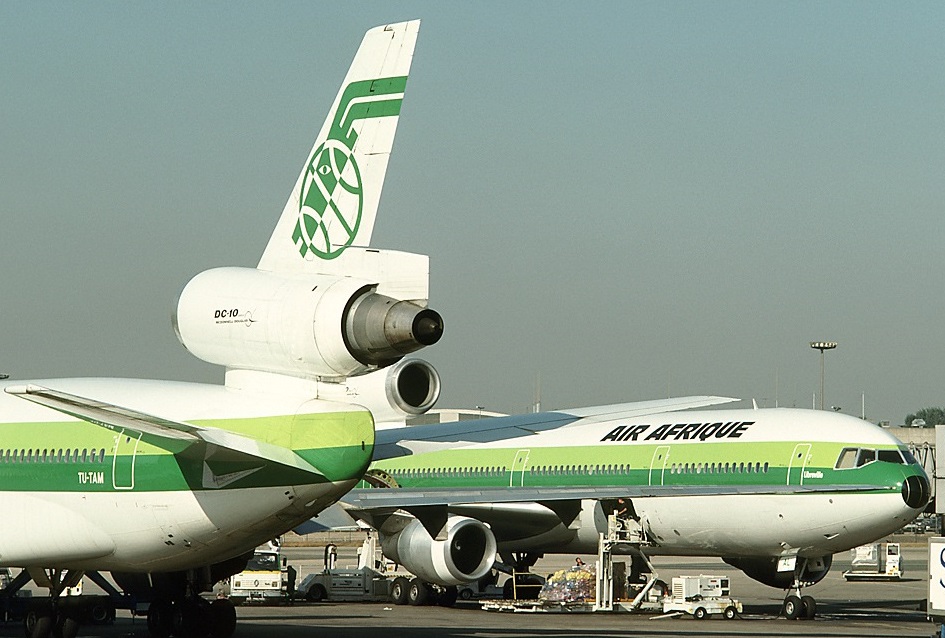
I had just wrapped up a week-long mission in Chad and was preparing for the twice-weekly Air Afrique flight from N’Djamena to Niamey, Niger. On the advice of our local office, I arrived at the airport three hours before departure.
While I usually flew business class on long-haul flights, my one-hour journey hadn’t qualified me for an upgrade. However, the travel unit had kindly booked me in business class anyway—a decision that, as it turned out, would save me a week of mission time or a significant amount of money.
An Unorthodox Airport Scene
Arriving early, I was second in line, soaking in the bustling atmosphere of the small but chaotic airport. The departure area was alive with people shouting conversations across the space as though proximity wasn’t a factor.
Despite the activity, the check-in area was eerily still. The doors were closed, with only a few guards milling about. A solid fence and a locked cage door separated us from the check-in counters. My colleague, from another UN agency, and I waited.
The flight—a 747 servicing Paris, Niamey, and N’Djamena—was a behemoth for the route, adding an air of anticipation. Then, an odd sight caught our attention: a conveyor belt door behind the check-in area was wide open, leading into a back office.
To our amazement, people began casually entering through the conveyor hole, reappearing moments later with boarding passes. It was unclear if these were for our flight, but the practice was bizarre enough to make us uneasy. When I suggested we try our luck, my driver adamantly refused, insisting it wasn’t for us.
The Announcement
Finally, the Air Afrique manager appeared, announcing matter-of-factly in French: “The flight is full. You can go home.”
This wasn’t an option for me—or my colleague, who had a critical presentation in Niamey the next day, with attendees flying in from ten countries. We protested, emphasizing that we had reconfirmed our tickets 72 hours prior. The manager seemed unmoved until he noticed the business class designation on my ticket.
Disappearing with our tickets, he returned ten minutes later with a boarding pass for me—in first class. My colleague was left stranded, along with many others in line, despite their confirmed reservations.
A Frustrating Wait
I was swiftly escorted through security and into the lounge. Nearly an hour later, my colleague joined me, visibly frustrated. Unable to secure a seat on our flight, he had been forced to purchase a last-minute ticket on a route from Chad to Niamey via Paris—an exorbitant detour for what should have been a one-hour journey.
We parted ways, and I proceeded to immigration to get my passport stamped. That’s when the next ordeal began.
The “Missing Paper”
The immigration officer demanded a piece of paper—a form issued upon my arrival, of which I was supposed to keep one copy. I had no such document, having been assured by the office staff that I needed nothing. The officer insisted I pay a “fee” to resolve the matter.
Our argument dragged on for ten minutes before he waved me through, without stamping my passport. It felt like a hollow victory as I braced for more complications.
Boarding Delays
At the gate, immigration officers were conducting additional checks. Predictably, my missing paper became an issue again. This time, they held my passport and asked me to step aside while other passengers boarded. Their hints at a bribe were thinly veiled, but I stood firm, refusing to give in.
The purser eventually intervened, diplomatically persuading the officers that holding me back would create more trouble than it was worth. Reluctantly, they handed over my passport, and I was finally on my way.
Reflections
As the plane ascended, I couldn’t help but reflect on the absurdity of the experience. Between the improvised boarding processes, misplaced priorities, and outright mismanagement, it wasn’t hard to see why Air Afrique eventually went bankrupt. The last time I was in Dakar, I counted at least ten Air Afrique planes grounded indefinitely—symbols of a company whose inefficiencies finally caught up with it.
For me, the chaos underscored the unpredictability of working in the field. Flexibility, patience, and a touch of stubbornness remain essential tools when navigating such situations. After all, in this line of work, getting there is often half the battle.