
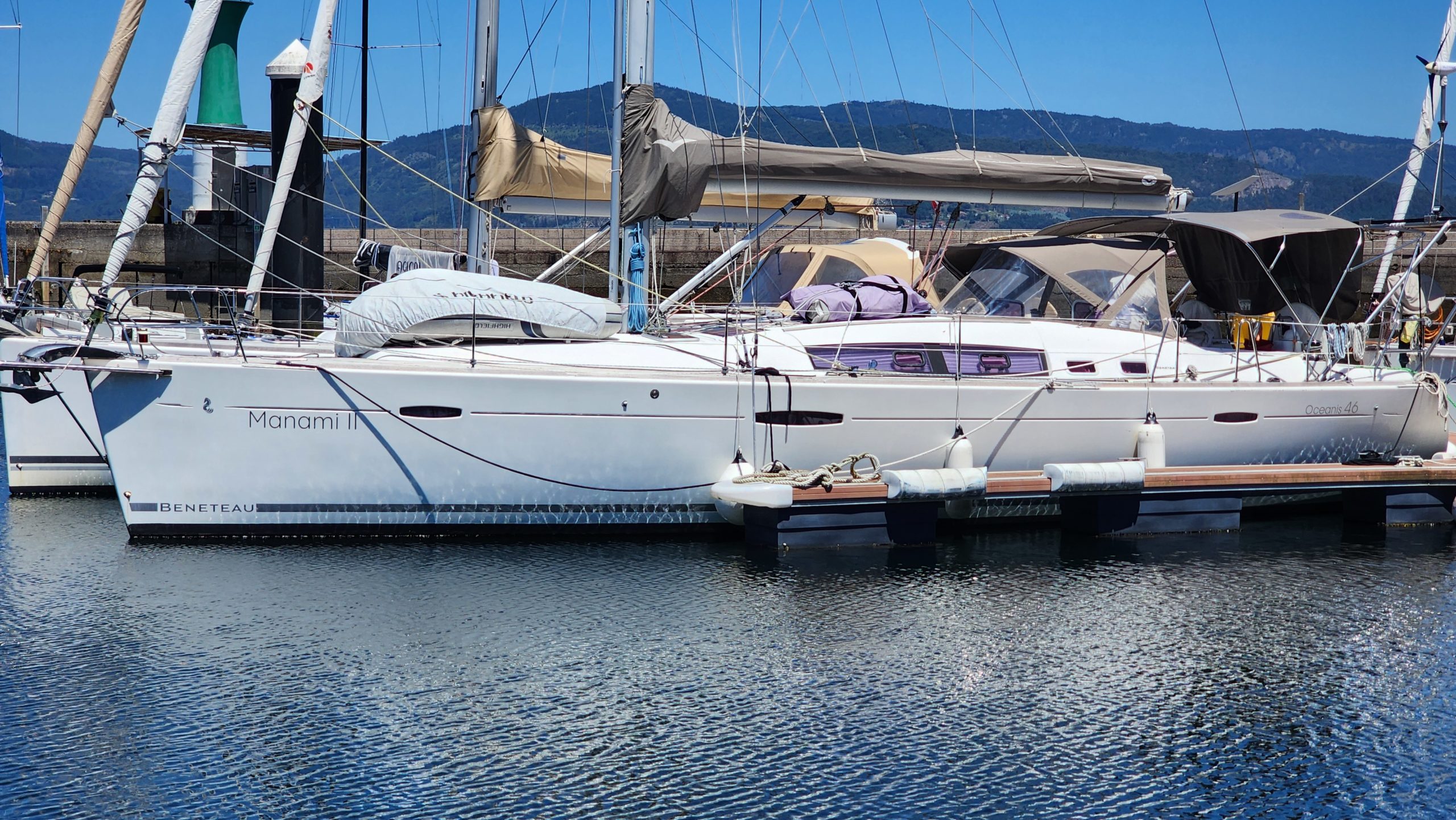

We bought Manami II in July 2024, fresh from her Atlantic crossing from west to east, and she was waiting for us in Vigo, Spain. By the end of the month, after sorting out the paperwork and logistics, she was fully ours.
The excitement of owning this yacht was tempered by early challenges. During the initial inspections, we discovered major issues with the Raymarine system—it wasn’t reliable at all. This came as a surprise since the yacht had just completed a transatlantic journey with a family aboard. The problem was intermittent, making it hard to diagnose. Little did I know this would catapult me into the deep end of learning the intricacies of Raymarine networking and troubleshooting.
A Race Against Time
With summer holidays in full swing in Spain and no service commitments possible until September, I decided the best option was to sail the yacht to the UK for servicing. In the Solent, access to parts and technicians would be far easier. The Spanish attitude of “mañana” (“call us in September, and we’ll look at the calendar”) wasn’t going to work for me.
We planned to leave on a Monday, aiming to take advantage of a good weather window. However, during our first two days of sea trials, the autopilot, navigation system, and key sensors—wind, depth, speed, AIS, and radar—would randomly stop working. This was perplexing because the entire Raymarine system, except for the autopilot and radar, had been newly installed in 2023.
By Friday evening, I was frustrated, sitting with my team over drinks at the marina, ready to give up hope of a quick fix. Then, a call came: the Raymarine technician asked if he could come over that night. It was 8 p.m., but I eagerly said yes.
The Raymarine Terrorists
The technician arrived—a seasoned expert with 30 years of experience. Earlier that afternoon, I had pulled out the autopilot controller and wind instrument, and what I found behind them gave me flashbacks to early computer networking days with coaxial cables. Just like those systems, the Raymarine network relies on properly terminated connections.

What I discovered, however, was a nightmare: someone had spliced a cable, piggybacking two instruments on one line. This was a fundamental no-go for the system. When I showed the technician the photo, he gasped, exclaiming:
“¡Terroristas! ¡Mamma mia!”
He then explained how things were done in the “old days.” Autopilot systems and navigational instruments were always kept separate, ensuring reliability. Combining them in a single network, as newer systems allow, can lead to cascading failures. He recommended a full rewiring of the boat, requiring two technicians on Monday.
DIY Fixes and Compromises
With limited time, I decided to tackle the problem myself over the weekend. Armed with new cables and connectors I’d purchased earlier, I rewired the system and separated the autopilot from the navigation instruments. I also split them into two independent 12-volt circuits. The downside? Wind and depth information were now only accessible via the navigation plotter, not at the helm.
Even with these compromises, the system proved reliable during our weekend sailing. It wasn’t perfect, but it was functional. We decided to press on with our Monday departure as planned, knowing I could rewire as needed en route—even if it meant temporary cables running across the cockpit or awkwardly hanging through the companionway.
One significant limitation remained: we had to choose between activating the depth meter or the fuel gauge—both couldn’t run simultaneously. Not ideal, but with eight GPS-enabled devices aboard (including offline maps on phones), AIS through VHF, and weather updates via Starlink or IridiumGO, we were well-prepared for navigation and safety.
Ready to Set Sail
With the technical challenges (mostly) under control, we turned our attention to provisioning. We restocked food, water, and fuel, ensuring everything was ready for the journey. Despite the challenges, we felt confident. But one lesson was clear: climbing into the cramped space under the cockpit to fix cables while the wind howls outside is an experience I never want to repeat.
The adventure was about to begin, and Manami II was ready to take us on her next chapter—despite a rocky start.
